AI product photos for e-commerce: laws by continent
Use AI for e-commerce product imagery without inventing what customers receive. A practical workflow and a sourced legal map across seven continents.
An AI-generated kitchen can turn a plain product photograph into a lifestyle scene in seconds. It can also make a plastic finish resemble ceramic, enlarge a storage box or add accessories the customer will never receive. For an online shop, the important question is whether the finished image accurately describes the product being sold.
AI product photography therefore needs two checks: product truth and the disclosure requirements of the relevant market. Keeping the physical product accurate does not automatically settle AI-label duties; adding an AI label does not automatically repair a misleading sales image.
Begin with a real product reference
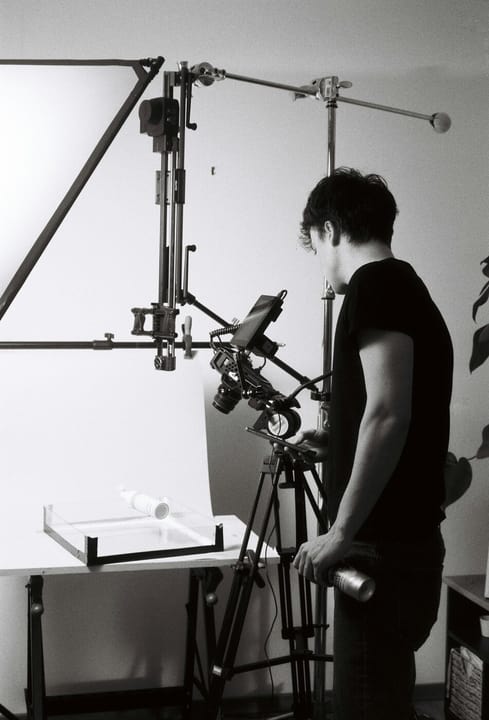
Photograph the actual item, its packaging, important details and available variants. Keep an approved reference showing color, proportions, materials and included components. For generated backgrounds, preserve the product on a separate protected layer where possible. This reduces opportunities for the generator to redraw it, although the scene can still imply an inaccurate scale or use.
Compare the final export with the reference. Inspect logos, label text, stitching, ports, reflections and the number of pieces shown. A convincing result can fail at a tiny detail that matters to purchasing. For clothing, check the garment's actual cut and fit rather than accepting a synthetic model as evidence of how it wears.
Treat fully generated product renders differently from photographs of existing stock. A concept for an unreleased item needs an accurate explanation of its status. Do not quietly replace the evidence customers need to evaluate what they are ordering. Our tabletop product guide provides a useful starting point for the reference shoot.
The legal map by continent
Checked 21 November 2026. The table uses representative jurisdictions, not a fictional continent-wide law. Selling location, targeted buyers, advertising placement and product category can change which rules apply. The applications to invented materials, accessories and performance are editorial examples of general legal standards, not reports of individual court decisions.
| Continent and market | Law and status | What changes for product images |
|---|---|---|
| Europe · EU and UK | EU: AI Act Article 50 and consumer-law Articles 6–7. UK: DMCC unfair-trading rules, applicable from 6 April 2025. | Separate provider marking from retailer disclosure of qualifying deepfakes. Product accuracy is a separate test. UK deceptive presentations and material omissions remain regulated. |
| North America · US and Canada | The US FTC framework and Canada's Competition Act address deceptive product claims. | Assess pictures with copy and overall impression. New York §396-b separately requires disclosure of known synthetic performers, subject to exceptions: generated humans, not every product render. |
| South America · Brazil | Binding Consumer Defence Code, Articles 30–31 and 37. | Precise advertising can bind the seller. Invented characteristics or essential omissions can mislead. Identifying an advertisement is distinct from disclosing AI origin; other countries need separate checks. |
| Asia · China and India | China's 2025 labeling Measures apply from 1 September 2025. India has CCPA advertising guidelines and IT Rules amendments, effective 20 February 2026. | Covered Chinese services assign provider, platform and publishing-user labeling duties. India's intermediary rules use a scope-limited synthetic-content definition; product stills are not automatically covered. Consumer-advertising accuracy applies separately. |
| Africa · South Africa | Consumer Protection Act §41 is binding national law. The AU Continental AI Strategy is policy. | Material misrepresentations about qualities, uses or accessories are prohibited. Check national law; the AU strategy is not a uniform continental AI-advertising statute. |
| Oceania · Australia and New Zealand | Australian Consumer Law and New Zealand's Fair Trading Act apply to misleading sales imagery. | Regulators explain that responsibility stays with the business when AI is used. Pictures must accurately represent the offer; a generated demonstration is not supporting evidence for performance. |
| Antarctica | The Antarctic Treaty provides a jurisdictional framework, not an AI retail code. | There is no single continental product-advertising regime in that treaty. Assess the applicable national and target-market rules; geography is not a compliance exemption. |
Read the EU dates and exceptions carefully
Article 50 generally applies from 2 August 2026. The enacted 2026/1744 amendment added Article 111(4): providers of covered systems marketed before that date have until 2 December 2026 for Article 50(2) marking compliance. That limited transition does not postpone a shop's applicable deepfake-disclosure duty.
The standard-editing exception belongs to the provider obligation in Article 50(2); it is not a blanket exemption for all commercial composites. Not every AI-assisted image is a deepfake. The Commission's November guidance discusses realistic consumer goods within that contextual definition; the guidance is non-binding, whereas the applicable Regulation is law.
Platform policy is a separate layer
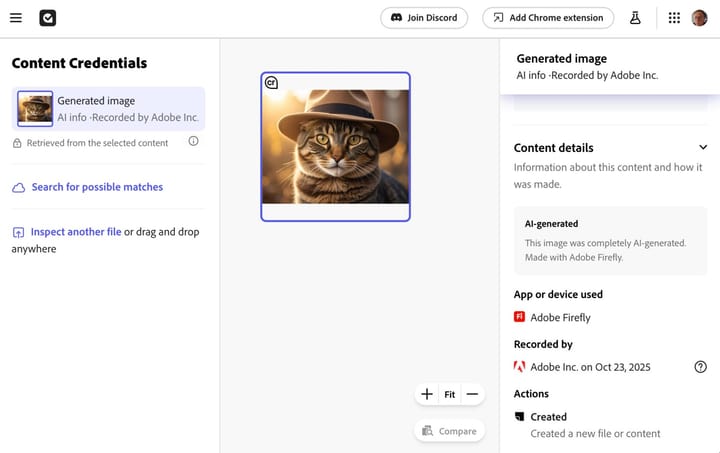
Google Merchant Center requires generative-AI images to carry the relevant IPTC DigitalSourceType metadata and tells merchants to preserve embedded provenance tags. This is a platform requirement, distinct from national legislation. Check the delivered file after resizing, export and CDN processing; a compliant working file does not prove its metadata survived distribution.
A visible caption and embedded metadata serve different purposes. Where disclosure is required, use the relevant market's format and placement rules. A caption describing an AI-staged background should accurately state what changed; it should not imply that the whole photograph was captured on location.
Keep image rights and approvals documented
Record the photographer's licence, any necessary model permissions and the generator's commercial terms separately. Do not promise exclusive copyright simply because someone entered prompts. The US Copyright Office's copyrightability report requires human authorship and explains that prompts alone are generally insufficient with current systems; other jurisdictions need their own analysis. Copyright ownership and advertising compliance are separate questions.
Before publication, give a reviewer the final image, the physical-product reference and the sales description. Ask what the picture implies about size, material, quantity, included props and performance. Remove unsupported implications instead of hiding an explanation in fine print. A rendered bottle surrounded by water, for example, may suggest a use the product has never been approved for.
Keep the original capture, layered edit, generated variants, final export, required disclosure and approval record together. Repeat the review when a supplier changes packaging or materials. This is a proposed production workflow, not a claim that GOBO tested a particular image generator.
The useful role for AI is to expand presentation while preserving what customers can reasonably expect to receive. Approve the product representation first, check the applicable disclosure and platform requirements, then publish the version whose claims you can support.