Your first roll of film, without the mystique
A straightforward routine for loading, metering, lab delivery and learning from the results.
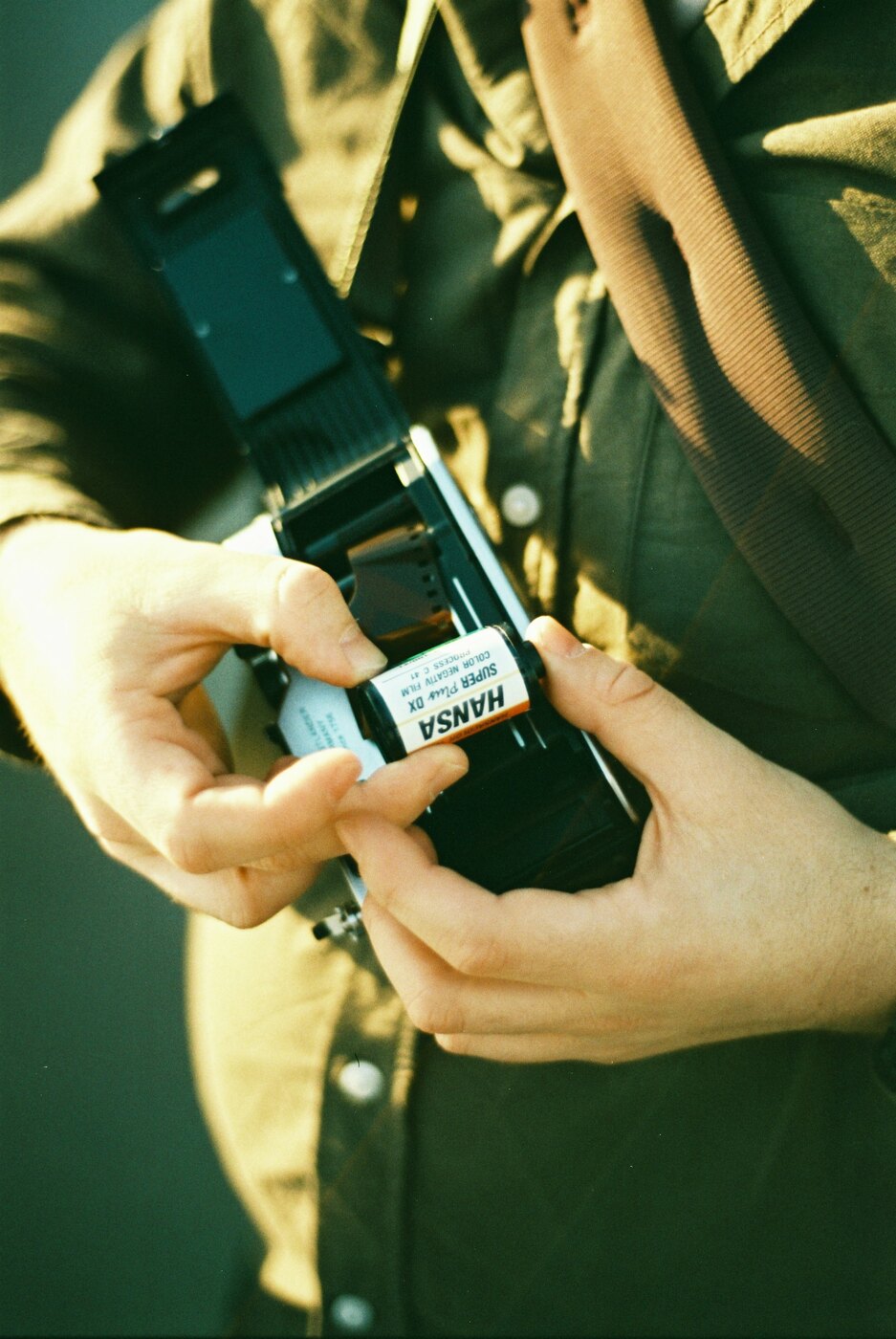
Start with a camera you know is working and one fresh roll. Before loading it, read the camera’s instructions for the film advance, rewind release and battery check. Film does not need to be a mystery, but an unfamiliar mechanism deserves a little patience.
Keep the variables manageable
Set the meter to the film’s rated sensitivity for your first roll. Photograph in light that is easy to judge, make a note of difficult exposures and avoid opening the back once the roll is loaded. Follow the camera’s rewind instructions before removing the film.
Choose a lab that processes the film type you bought. Ask what its basic scans include, whether negatives are returned and how it wants instructions supplied. Keep the negatives after scanning; they are the original record.
Read the result
Look at the whole roll before choosing favorites. Are mistakes consistent, or do they appear only in certain conditions? A lab can often help you distinguish exposure problems from a possible camera fault. Test with a modest roll before trusting an unverified camera with an important occasion.
Check the camera before loading the story
A newly acquired film camera may have an uncertain history. Inspect it according to the manufacturer’s instructions and ask a competent repairer about anything that seems wrong. Avoid forcing a stiff mechanism or assuming that a moving lever proves everything is healthy. If the camera has not been verified, treat the first roll as a test rather than taking it directly to an occasion you cannot repeat.
Make a brief record of the camera, lens, film and any settings you are unsure about. Photograph the setup with another device if that helps you remember it. When the roll returns, those notes make it easier to investigate a pattern. Without them, a disappointing result can become a vague argument about whether the camera, film, lab or photographer must have been responsible.
Choose a film and processing route together
Before buying a roll, confirm that you can have that film type processed conveniently and at a cost you accept. Ask the lab what it handles and what its basic service includes. Do not infer the full workflow from the appearance of a box. A clear processing route gives you fewer variables to untangle while you are learning how the camera behaves.
Buy an ordinary, fresh roll for the initial test rather than making an expired or unfamiliar material carry several experiments at once. Store and handle it according to its instructions. Film can invite playful experimentation later, but the first useful result is a reference you understand. Once you know how a dependable roll looks through your chosen process, intentional departures become easier to evaluate.
Make loading a calm procedure
Read the specific loading instructions before beginning, and work somewhere you can pay attention. Different cameras indicate film transport in different ways. Know which signs your model provides rather than relying on a procedure remembered from another body. If something does not behave as expected, pause and consult the manual. Repeatedly forcing the advance is not a reliable diagnostic method.
After loading, record the film sensitivity and check the relevant setting. If you are using a camera meter, confirm its battery requirements and recommended operation. A separate meter or another reference method can be useful, but be clear about what you are comparing. The purpose is a repeatable exposure routine, not the appearance of working entirely by instinct before you understand the equipment.
Give the test roll a useful range of scenes
Include a simple daylight scene, a face in comfortable light, a subject with both bright and dark areas and another frame containing detail you can inspect. Keep the first session manageable. You are trying to learn how this combination of camera, film and processing behaves, not prove that it can handle every difficult photographic situation on its first outing.
Write a few exposure notes and identify the approximate frame when something feels uncertain. It is not necessary to turn every walk into a laboratory notebook. A handful of clear records is enough to connect a result with a decision. When a photograph surprises you, that connection helps distinguish an interesting accident from a method you can deliberately repeat.
Rewinding and lab instructions deserve attention
Follow the camera’s instructions for the end of the roll and rewind. Do not open the back simply because you think you have reached the final frame. If you are uncertain whether the film has returned to its cartridge, stop and seek guidance before opening it. Avoid turning a minor uncertainty into the loss of the whole test through a hurried assumption.
Give the lab concise instructions and ask how negatives will be returned. Confirm whether the quoted service includes scans, prints or only processing, and what scan options mean in the context of your intended output. Tell the lab if the roll is a camera test and ask whether it can flag visible problems. Keep the process simple enough that the result supplies a useful baseline.
Read the negatives as well as the scans
A scan is an interpretation made through a particular digitizing workflow. If an image looks disappointing, ask the lab whether the negative suggests an exposure, camera or scanning issue before deciding what happened. Do not diagnose a mechanical fault from one small online preview. Preserve the negatives and any relevant notes so a knowledgeable person can examine the actual material if necessary.
Look for patterns across the roll. Are problems repeated at similar moments, or scattered without an obvious relationship? Do some frames look normal while others differ sharply? Your notes can help you ask a more useful question than “Why does film look like this?” A specific observation gives a lab or repairer something concrete to investigate and helps you plan the next test.
Give the photographs an ending
Select a few images and make a small print or sequence rather than leaving the first roll as a novelty folder on your phone. Notice what the limited number of frames changed about your decisions. Did you wait more, avoid making a necessary experiment or pay closer attention to the edges? Film is not automatically a route to better seeing, but it can make habits easier to observe.
Keep the successful method simple for another roll before changing several variables. Once you have a dependable routine, experiment with a purpose: another kind of light, a different subject or a new way of editing the sequence. The reward is not a claim that one medium is more authentic than another. It is a photographic process you understand well enough to use with confidence and curiosity.