Flash vs continuous light: choose around the photograph and the workflow
Compare previewing, motion, synchronization and the complete lighting kit without confusing flash duration with shutter speed.
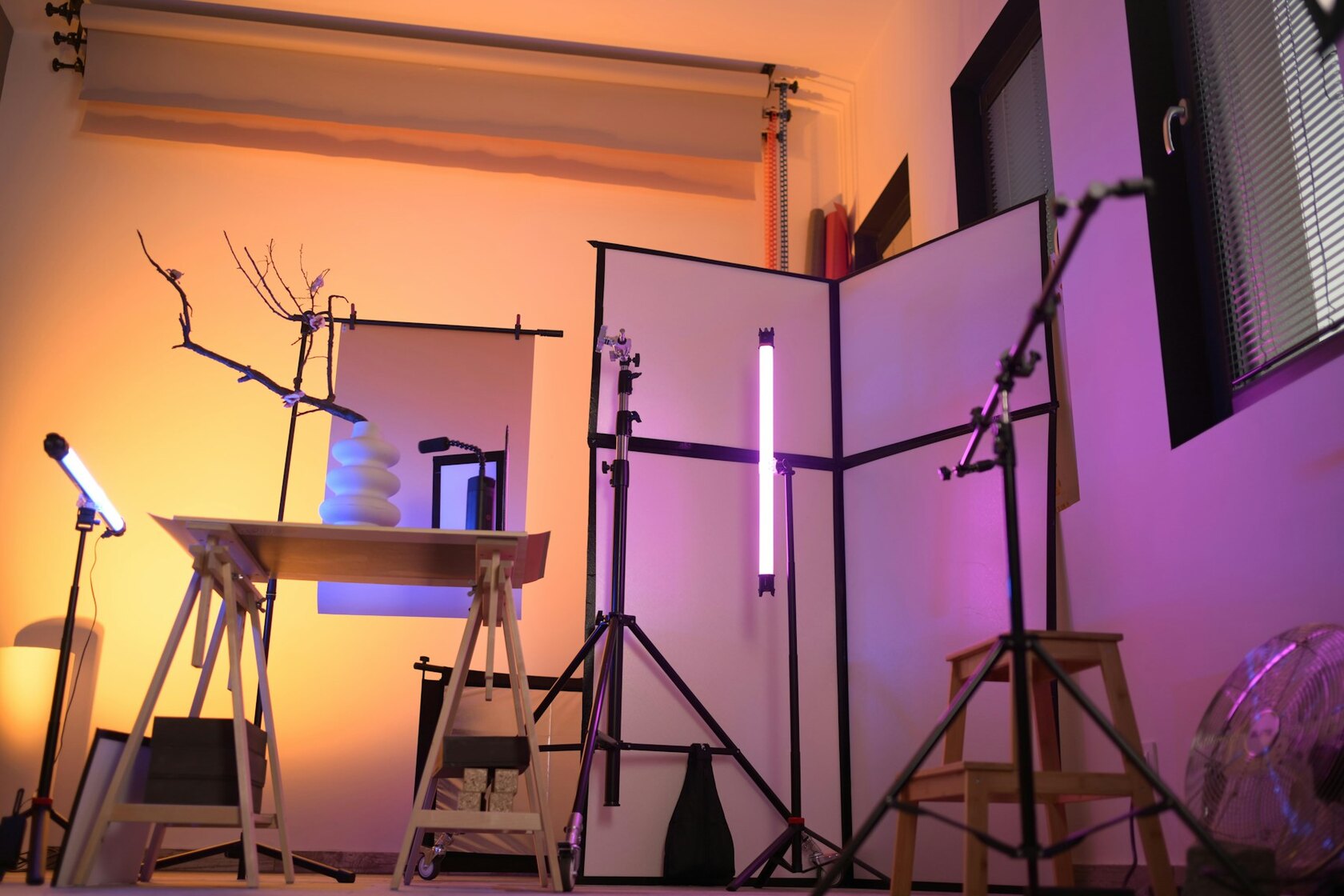
Flash and continuous light can both produce soft portraits, hard shadows, clean product photographs or dramatic contrast. The difference is not a fixed visual style. It is how the light arrives during the exposure, how you judge it on set and what the assignment requires. Before choosing equipment, decide whether you need still photographs, video, moving subjects or a mixture.
Start with one subject and one lighting intention. Perhaps you want a soft portrait beside a dark background, or a product with a clear edge highlight. The comparison below is a workflow guide, not a measured ranking of lamps. Actual output, color behavior, battery life and control depend on the equipment and settings you choose.
| Decision | Continuous light | Flash |
|---|---|---|
| Preview | See the illumination while composing | Judge the final exposure with a test frame |
| Motion | Shutter speed governs recorded movement | Flash duration and ambient contribution both matter |
| Video | Can illuminate the recording | Ordinary still-photo bursts do not provide continuous video lighting |
| Working pace | Check power, heat and fan behavior | Check synchronization and recycle time |
Continuous light: see the illumination while working
A continuous source stays on while you compose and expose. You can watch the shadow move as you adjust the lamp, see reflections on a product and direct a subject using the light already present. That makes experimentation intuitive. The same lighting arrangement can also illuminate video, provided its output and behavior suit the camera settings.
The camera still needs enough light for the intended aperture, shutter speed and ISO. A lamp that looks bright to your eyes may require a slower exposure than a moving subject permits. Add diffusion and its usable output at the subject changes again. Test the complete arrangement, including modifier and distance, rather than judging a bare lamp in a shop.
For recorded dialogue, consider whether cooling-fan sound becomes audible to the microphone. For video or fast stills, check for flicker or banding at the actual frame rate and shutter settings. Review a short recording and sample photographs before the assignment. A specification sheet is a starting point; compatibility with your working setup is the practical question.
Flash: a brief contribution to the exposure
A flash emits a short burst timed with the exposure. A compatible modeling lamp may preview the direction and shape of the light, but it does not necessarily show the final flash exposure or the balance with ambient light. Make a test frame, assess it, then change one control. The feedback loop is different from judging a continuous source directly.
Flash can be useful when the required brief light output is difficult to obtain from a continuous setup of manageable size. That is a reason to evaluate it, not a claim that every flash is more powerful than every LED. Compare what a particular kit delivers through the modifier at your required distance and aperture.
Shutter speed and flash duration are different
At ordinary synchronized shutter speeds, a brief flash can record a moving subject sharply while the shutter remains open for longer. The result depends on flash duration and how much other light records the movement. Broncolor's published demonstration combining continuous light and flash shows both a sharp flash-lit subject and an ambient-lit motion trail within the same exposure.
For an action photograph, first make a frame with the flash disabled at the intended camera settings. If the moving subject is clearly visible, ambient light may contribute a trail when flash is added. Decide whether that trail serves the picture. Flash does not automatically erase it. Duration also changes with equipment, power and operating mode, so consult the relevant technical specifications.
Learn synchronization before using high-speed sync
Many camera-and-flash combinations have a normal synchronization limit. Exceeding it without a supported method can produce incomplete illumination. Check the camera, trigger and flash instructions together, including restrictions with electronic shutters. Do not assume that a camera's fastest advertised shutter speed is also available for ordinary flash photography.
High-speed sync can enable compatible systems to work above their normal sync speed, but it changes how the flash emits light. Profoto explains that HSS loses usable output compared with normal flash because illumination extends across the shutter's travel. The size of that loss depends on the setup. HSS is not simply a free route to shorter flash duration.
Softness depends on the source you create
A flash bounced into a large surface can produce soft light. A small undiffused continuous lamp can produce hard light. Apparent source size, position, distance and the surrounding surfaces shape the shadows. Choose a modifier because it makes the intended light, then check whether the source behind it has sufficient output.
For a simple portrait comparison, place a continuous source and a flash behind similar modifiers, one at a time, at the same position. Match exposure as closely as the equipment permits. Compare shadow edges and reflections separately from how convenient each setup feels. This exercise helps prevent a preference for one modifier being mistaken for a universal preference for a lighting technology.
Compare the complete kit and the working pace
Flash output is often specified in watt-seconds, while a continuous fixture may list electrical watts or measured illumination under stated conditions. Those numbers cannot be compared directly as if they described the same thing. Look for useful measurements at relevant distances and settings, or test the kit with the modifier you intend to use.
Include triggers, stands, modifiers, batteries, power supplies and transport in the decision. With flash, verify recycle time at the required output and shooting pace. With continuous light, assess power availability, heat, fan behavior and subject comfort over a realistic session. A compact purchase can become a bulky working system once all the necessary accessories are included.
Choose with a short assignment trial
For a talking-head video and matching portraits, continuous lighting may simplify the shared setup. For still portraits with substantial ambient light or brief subject movement, flash may deserve the first trial. For a stationary tabletop photograph, either can work; the more useful comparison may be reflection control, color consistency and setup time.
Rent one suitable kit and reproduce a normal assignment. Record the camera settings, modifier, distance, power level and any operational frustrations. Review the finished files and the experience of making them. The useful winner is the setup that repeatedly meets your deliverable with a pace you can manage, while leaving enough attention for the subject in front of the camera.