Nikon’s 120–300mm puts a little more reach within reach
The NIKKOR Z 120–300mm f/2.8 TC VR S pairs a fast zoom with a built-in 1.4× teleconverter.
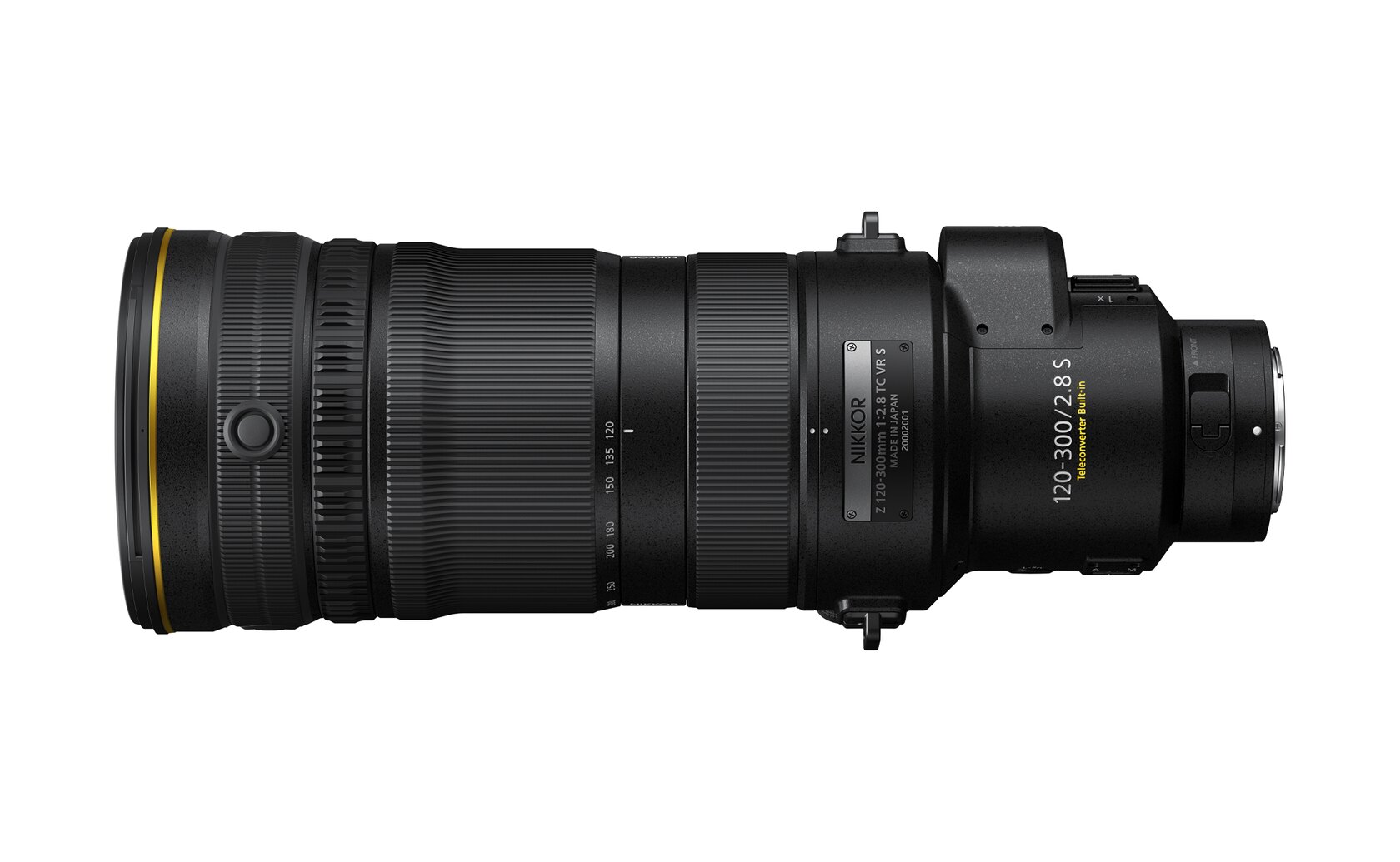
Nikon has announced the NIKKOR Z 120–300mm f/2.8 TC VR S for full-frame Z-mount cameras. Its built-in 1.4× teleconverter extends the zoom’s long end to 420mm at the flip of a switch.
The lens has a constant f/2.8 maximum aperture without the teleconverter engaged. Nikon lists its weight at approximately 2,735 grams and positions it for professional sports photography.
Why the built-in converter matters
Switching reach without removing a lens can be useful when subjects move between nearby and distant parts of a venue. As with any teleconverter, extra reach comes with an exposure trade-off; check the manufacturer’s specifications for the complete operating details.
This is an announcement summary, rather than a hands-on review. Autofocus performance, balance and real-world image quality need field testing before any buying verdict.
Translate reach into the photograph you need
The announcement is summarized above; the following analysis explains the decisions a sports photographer might investigate. A longer focal length is useful when it changes a practical framing problem. Imagine covering a match from a fixed position. Some action happens close enough for an environmental picture, while another phase unfolds across the field. Write down the distances and framings that repeatedly cause difficulty before deciding that more reach is the answer.
Review a previous assignment at its intended delivery size. Which images genuinely needed a tighter frame, and which could have benefited from leaving more context? An athlete surrounded by space can tell a different story from a close expression. A versatile lens expands the options, but the photographer still decides what the frame should explain. The longest available setting should not become the automatic choice.
Account for the exposure trade-off
A teleconverter changes effective focal length and maximum aperture together. Multiplying f/2.8 by 1.4 gives approximately f/4, a change of about one stop. That arithmetic matters when shutter speed is constrained by moving subjects. You may need to adjust sensitivity, accept a different rendering of motion or wait for a better-lit part of the action. The additional reach is useful, but it does not arrive without a trade-off.
Make that trade-off visible in your planning. Compare the exposure settings you actually used at the most difficult venue, rather than imagining ideal daylight. Check whether your intended output tolerates the higher sensitivity you might need. Then test the relevant camera and lens combination under similar conditions. A spreadsheet can describe the relationship; only suitable photographs can show whether the result meets your own requirements.
Framing flexibility is different from subject acquisition
Being able to frame tightly does not guarantee you will find and follow the subject quickly. At a long focal length, a small change in direction can move action out of view. Practice identifying the next likely point of action before raising the camera. Work on the transition between observing the whole scene and following a detail, rather than treating continuous shooting as the solution to every uncertainty.
This is also a reason to test controls while keeping your eye to the finder. Establish which changes you can make confidently and which require a pause. A built-in control can reduce one kind of equipment handling, but it introduces another action you must use deliberately. The useful question is whether that action fits your timing. Do not assume a feature is operationally effortless simply because its description is short.
Judge the complete carrying arrangement
A listed lens weight tells only part of the story. Add the camera, support, spare equipment and anything needed for the venue. Consider how the kit will be carried from arrival to departure, not just how it feels during a brief demonstration. Working from a fixed seat, moving between positions and covering an outdoor event through changing conditions can ask very different things of the same equipment.
If you normally use a monopod or another support, test the complete arrangement. Check how readily you can change framing, lower the camera and move safely around other people. Follow the manufacturer’s instructions for mounting and carrying the equipment. Comfort is worth recording during a realistic session because fatigue can change the decisions you make near the end of an assignment, when the most important action may still be ahead.
Design a field test that answers your brief
A useful review would separate several questions: focus consistency, framing speed, handling, rendering and the effect of engaging the converter. Photograph comparable subjects under controlled conditions where possible, then add a real sequence of unpredictable movement. Keep the camera settings and processing choices documented. This makes it easier to distinguish an equipment limitation from a change in technique, light or software treatment.
Evaluate complete sequences, including the frames you would normally discard. A single sharp image does not establish consistency, and a missed frame does not by itself identify the cause. Look for patterns. Were the difficult moments clustered around a transition in distance, an obscured subject or a particular direction of movement? Those questions are more informative than declaring a winner from a few attractive examples.
Compare ownership with access
For occasional specialist assignments, renting or borrowing may be a more useful first step than buying. The relevant calculation includes how often the lens would be used, whether the assignment requires that specific capability and what a suitable alternative would cost. Use real quotations and your own calendar. GOBO is not predicting the financial return from equipment that we have not tested in your business.
There is also a learning benefit to a trial. You can discover whether the focal-length range suits your positions and whether the carrying arrangement is realistic before reorganizing a kit around it. Leave enough time to familiarize yourself with the equipment before the event. An unfamiliar professional lens is still unfamiliar equipment, regardless of its specifications or the confidence its appearance might suggest.
Keep the assignment larger than the lens
Sport is not only the decisive instant of contact or victory. Preparation, anticipation, disappointment and the surrounding audience can belong in the story. Plan how you will make those photographs as well. A specialist long lens may solve one part of coverage while another camera, a different position or simply a moment of observation provides the frame the sequence needs next.
The most useful conclusion from this announcement is therefore a question: does this combination of range, aperture and switching convenience solve a recurring problem in your work? If it does, investigate it with a realistic test. If it does not, the launch remains interesting industry news without becoming a reason to replace equipment that already lets you tell the story.