How to build a photography shot list for a client shoot
Turn the brief into clear image requirements, useful priorities and a plan that leaves room for unexpected photographs.

A useful shot list translates an assignment into photographs people can recognize, make and approve. It connects the brief with the working day: which images are essential, what each must communicate and which practical dependencies need to be ready. The document can be short. Its value comes from reducing ambiguity at the moments when time, access or a waiting subject make another round of interpretation expensive.
Begin with the actual output rather than a collection of attractive references. A website launch, an editorial profile and a product catalog can require very different coverage even when they involve the same location and person. Ask where the pictures will appear, who will select them and what would make the assignment feel incomplete. Then turn those answers into a manageable plan that still leaves room for observation.
Give each required image a purpose
Describe what a photograph needs to do. An establishing image may orient the reader; a portrait may introduce the person; a detail may explain a process. “Three pictures of the workshop” leaves more uncertainty than three distinct visual tasks. Purpose also helps the photographer adapt when the location changes, because the intended communication remains clear even if the original composition is unavailable.
Keep the description concise and observable. If a frame must show a specific feature or include several people, say so. Avoid relying only on mood words that different participants may interpret differently. References can help a conversation, but explain which aspect matters: light, scale, framing or atmosphere. Otherwise a reference may be treated as an instruction to copy details that were never important to the brief.
Separate commitments from opportunities
Mark the images that must be delivered and distinguish them from worthwhile variations. This gives the working day a clear priority when access or time changes. An optional experiment should not quietly displace a required view. Equally, a list containing only mandatory frames can make the session feel mechanically complete while leaving the photographer no space to discover a stronger visual relationship.
Agree how to handle a requirement that becomes impractical. Identify the person who can approve an alternative and the kind of result that would serve the same purpose. This small conversation is often more valuable than adding another page of hypothetical compositions. A flexible plan depends on clear authority and intent, not on pretending every circumstance can be predicted before the camera leaves its bag.
Record format and layout needs early
Orientation, aspect ratio and space for a headline can affect how a photograph is made. Put those requirements beside the relevant image instead of leaving them in a separate email nobody remembers during the session. If a layout needs both a wide banner and a tighter portrait, consider whether one capture can genuinely serve both or whether the assignment needs distinct frames.
Use real dimensions or a clear reference layout when available, and label provisional requirements as provisional. Do not invent precision merely to make the document look finished. A photographer can plan useful cropping room when they understand the direction of travel. A late request for a radically different shape is much harder to accommodate when important details already sit near the edges of every chosen frame.
Make dependencies visible
Some images require a person, a prepared product, a particular activity or access to a space. Record those dependencies and who is arranging them. A beautiful composition cannot be made if the relevant object is still in transit or the person has already left. The shot list should help the organizer understand what needs to exist in front of the camera, not only what the final photograph should resemble.
Group related setups where it makes practical sense, while preserving priorities. Several details made in one place may be efficient to capture together, but a brief opportunity with a key person may deserve attention first. Do not confuse the final presentation order with the order of the working day. One is an editorial relationship; the other is a plan shaped by access, light and human availability.
Give images stable identifiers
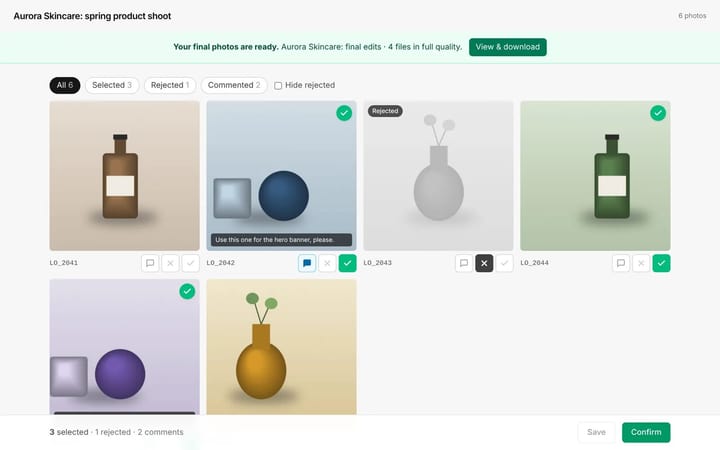
Assign a short, unambiguous reference to each planned image or setup. The exact system matters less than using it consistently across the brief, working notes and review. A client should be able to say which requirement is missing without describing where a thumbnail appeared on a screen. Stable identifiers also help connect a chosen frame with its intended role during editing and delivery.
Keep revisions readable. If the requirement changes, record the change rather than silently replacing a description that another collaborator may still be using. You do not need a complicated approval platform for every small assignment. You need one current version people can find and a clear understanding of who can change the commitments it contains. Simplicity should make coordination easier, not conceal decisions.
Review coverage while the scene is available
Build in a sensible moment to compare the working set with the essential list. Check that the required view is actually present and usable, rather than merely remembering that you attempted it. Look at important expressions, product details and framing needs while there is still an opportunity to make an adjustment. A quick, specific coverage review is more useful than a broad declaration that everything looks great.
Keep that review focused. It should identify missing information or a required correction without turning every frame into a new creative direction. Record consequential feedback and who supplied it. If the list is serving its purpose, the conversation becomes clearer: this image answers the brief, this detail remains missing and this variation is optional. The team can then move on with a shared understanding.
Leave room for the photograph you did not predict
Once the essential coverage is secure, use the available time to follow a promising observation. An unplanned gesture, a quieter corner or an unexpected detail may strengthen the final set. The point of planning is partly to create that freedom. When the commitments are visible, the photographer can explore without wondering whether a forgotten requirement is about to undermine the whole assignment.
After delivery, compare the planned images with the ones that proved most useful. Note which instructions were clear, which dependencies caused delay and where an unexpected frame improved the result. Carry those observations into the next brief. A good shot list develops through completed work: it becomes a concise record of what the photographs must achieve, while preserving enough flexibility for someone to see something better.