Full-frame vs APS-C vs Micro Four Thirds: choose the whole system
Compare framing, depth of field, low-light needs and the lenses you will carry before choosing a sensor format.
Sensor size changes the lenses you need, the way you control background blur and the compromises inside your camera bag. It does not decide whether a photograph deserves publication. A useful comparison starts with the picture you need to make, then asks which complete system gets you there reliably.
Full-frame, APS-C and Micro Four Thirds can all serve serious photographic work. The differences become clearer when framing, shooting distance, shutter speed and final image size are held constant. Without those conditions, a comparison can easily reward a different composition or a brighter lens rather than the sensor itself.
Start with the actual dimensions
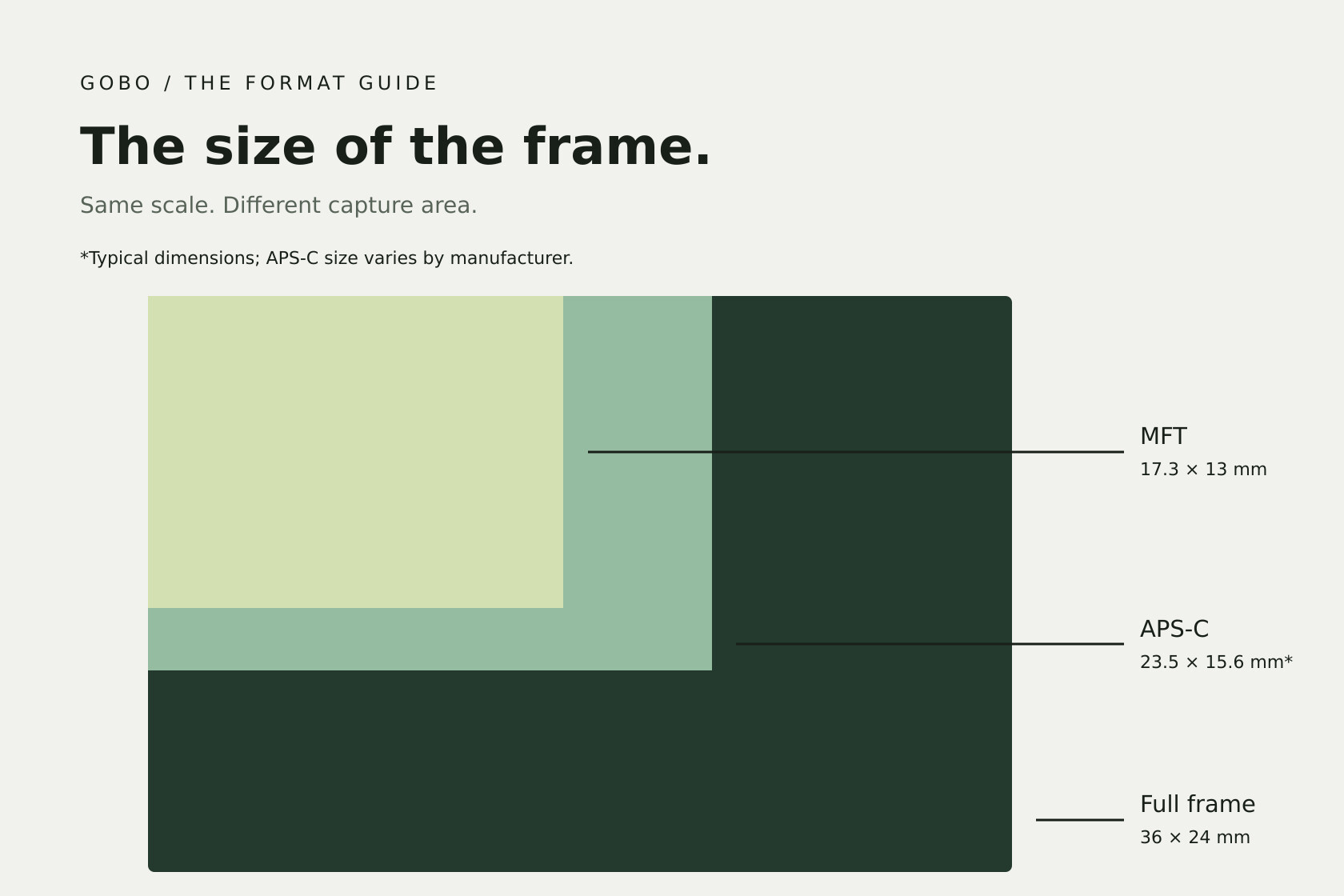
Full-frame usually means a sensor approximately 36 × 24mm, corresponding to the familiar 35mm still-film frame. APS-C describes a family of smaller dimensions rather than one universal rectangle. Nikon's Z50II, for example, specifies 23.5 × 15.7mm; Canon has used 22.3 × 14.9mm APS-C sensors. Micro Four Thirds commonly uses a 17.3 × 13mm imaging area.
These are physical dimensions, separate from megapixel count. A 24-megapixel camera does not have a particular sensor size simply because its output contains 24 million pixels.
The native shape also matters: full-frame and typical APS-C stills are 3:2, while Micro Four Thirds is normally 4:3. Cropping either to a square, a magazine layout or a widescreen frame discards different amounts of the original image.
Sources: Nikon Z50II specifications, Canon sensor specifications and OM SYSTEM OM-3 specifications.
Crop factor describes framing
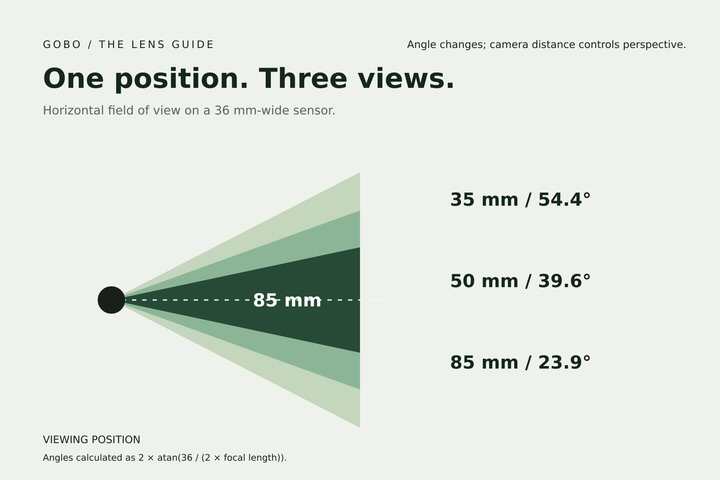
A lens keeps its actual focal length when mounted on a different compatible camera. The smaller sensor records a smaller portion of its projected image. Crop factor expresses the resulting angle of view in familiar full-frame terms.
For a 50mm lens, the approximate comparison is 75mm-equivalent on a 1.5× APS-C camera, 80mm-equivalent on Canon's 1.6× APS-C format, and 100mm-equivalent on Micro Four Thirds. These figures describe framing, not a physical extension of the lens.
That distinction matters for wildlife. A tighter view can put more of a distant animal into the finished frame, but it does not guarantee more resolved detail. Pixel density, the lens, atmospheric conditions and focus still matter. Likewise, full-frame does not own wide-angle photography: smaller formats simply require appropriately shorter lenses to capture a comparable scene.
Sources: Nikon's explanation of DX and FX and the official Micro Four Thirds FAQ.
Compare background blur on equal terms
For the same viewpoint, comparable framing and the same f-number, a smaller format generally gives greater depth of field. Matching the framing requires a shorter focal length, which also changes the physical aperture opening. This is why a full-frame portrait can show stronger background separation even when both cameras display f/2.
As an approximate geometric comparison, a 25mm f/2 lens on Micro Four Thirds resembles a 50mm f/4 setup on full-frame for angle of view and depth of field. The comparison assumes matched viewing conditions and comparable image proportions; it is not a promise of identical rendering from different lens designs.
Crucially, the Micro Four Thirds lens remains f/2 for exposure. You do not multiply the aperture setting when metering a photograph. Equivalent aperture is a way to compare image appearance across formats, not a replacement exposure scale. ZEISS explains this distinction in its technical paper on depth of field and bokeh.
More sensor area creates possibilities
At comparable scene brightness, f-number and shutter speed, a larger imaging area can gather more total light. That is one reason larger formats can offer cleaner results in demanding conditions. Canon's explanation of full-frame benefits discusses the relationship between sensor area, pixel size and noise.
But a format label is not a measurement. Sensor generation, readout design, exposure and image processing complicate comparisons. Noise and dynamic range are also different characteristics: a camera's shadow recovery at low ISO does not fully describe its high-ISO performance.
Look for results at the shutter speeds and output sizes you actually need. Compare RAW files with consistent processing as well as the camera's JPEGs. DXOMARK's sensor-testing methodology illustrates why noise, dynamic range and sensitivity need controlled measurements instead of a single marketing adjective.
Weigh the lenses you will carry
A camera body is only part of the system. Add the normal zoom, portrait lens or long telephoto you genuinely expect to carry, plus batteries, support and a bag. Compare the resulting kit rather than matching two bodies and assuming everything else stays equal.
Smaller imaging circles can enable compact lenses, but an ambitious professional zoom may still be substantial. A small full-frame body with a modest prime can be easy to carry; an APS-C body attached to a large full-frame telephoto may save relatively little overall weight. Aperture requirements can change the comparison again.
Check compatibility before counting existing lenses as a saving. Mount, image-circle coverage, adapters and feature support are separate questions. The Micro Four Thirds standard supports cross-brand combinations, but its official FAQ cautions that manufacturer-specific functionality can vary. Read the documentation for the actual combination.
Check body features separately
Sensor format does not specify the autofocus system, buffer, controls or viewfinder. List those requirements separately. An assignment with unpredictable movement needs a different evaluation from a carefully lit still life, even if both are delivered at the same resolution.
For example, ask how the camera handles the subjects you photograph, whether the buffer clears quickly enough, and what happens when you use electronic rather than mechanical shutter. Read the limitations attached to headline burst figures. Check battery testing conditions, memory-card requirements and the availability of a second card slot if redundant recording matters to your work.
These questions can change the shortlist without changing the sensor discussion at all. Manufacturer specification tables, including Nikon's Z50II reference, separate imaging dimensions from operational features. Use that distinction when making your own comparison sheet.
Choose around the assignment
For events in poor light, investigate high-ISO image quality alongside autofocus, fast-lens availability and the shutter speed needed for moving people. Stabilization can help camera shake; it cannot hold a walking subject still.
For hiking and wildlife, compare a complete telephoto kit, weather protection and handling over several hours. For products, travel details or groups, greater depth of field may be useful rather than something to defeat. For portraits, check whether the lenses available within your budget deliver the separation and working distance you want.
Before buying, borrow or rent the combinations you are considering. Make the same photographs, export them to the same dimensions and judge them as clients will see them. Record what actually limits the assignment: missed focus, uncomfortable weight, insufficient detail or an unavailable lens. The sensible format is the one that addresses that limit while leaving enough budget and energy to keep making photographs.